Arlington County Approves Ballston Macy’s Redevelopment

On December 17, 2022, the Arlington County Board approved the redevelopment of the Ballston Macy’s department store in the Ballston neighborhood.

The Macy’s, formerly a Hecht’s department store, was originally constructed as the main anchor of the Parkington Shopping Center, which opened in 1951 as Northern Virginia’s first major suburban shopping center. At the time it opened, the five-story, 300,000-square-foot store was the largest suburban department store on the East Coast.

Following the opening of the Ballston Metrorail station in 1979, Ballston was transformed into a mixed-use community with multifamily residential uses, offices, and restaurants. Parkington was repositioned as Ballston Common Mall in the early 1980s, and reopened as Ballston Quarter in 2019.

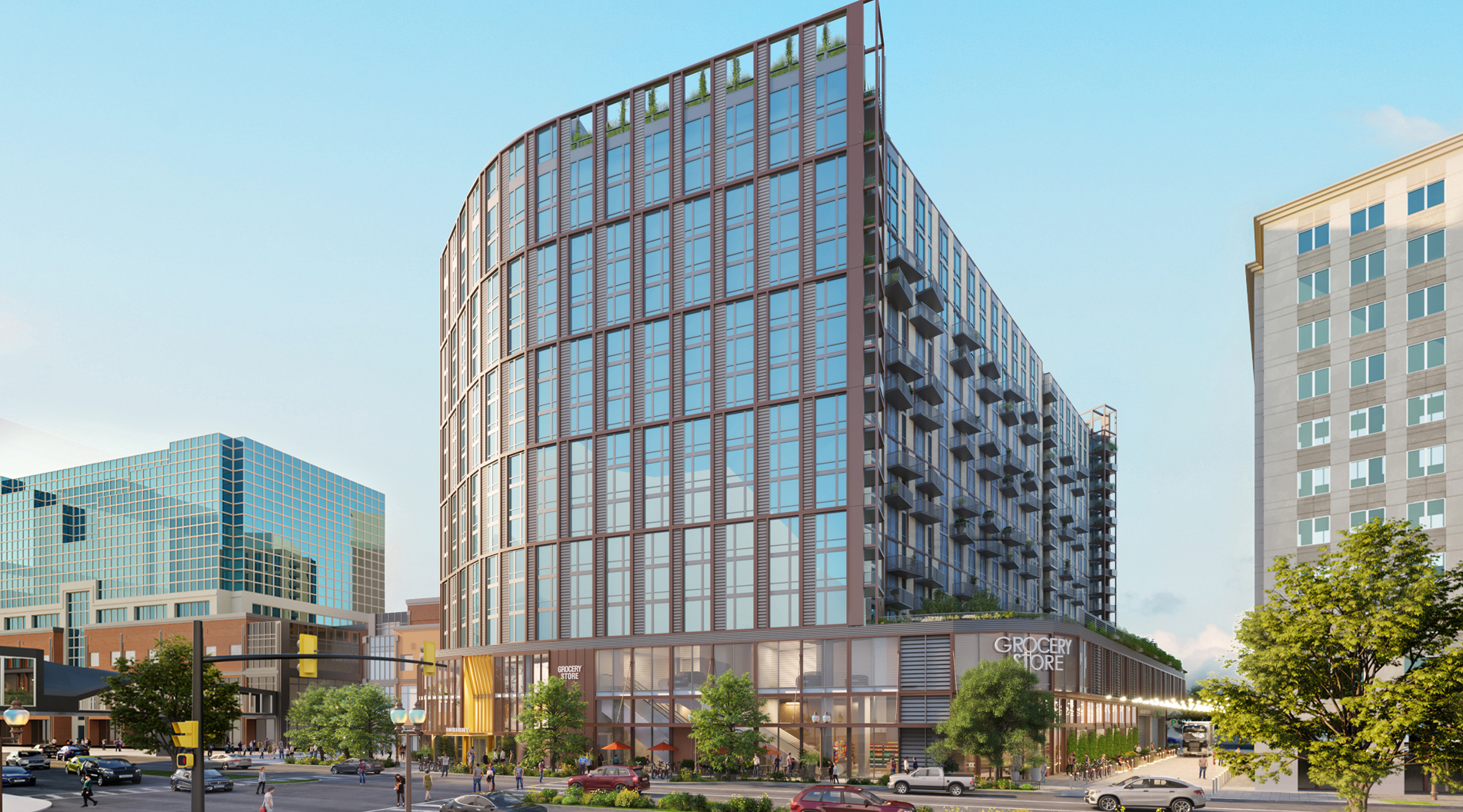
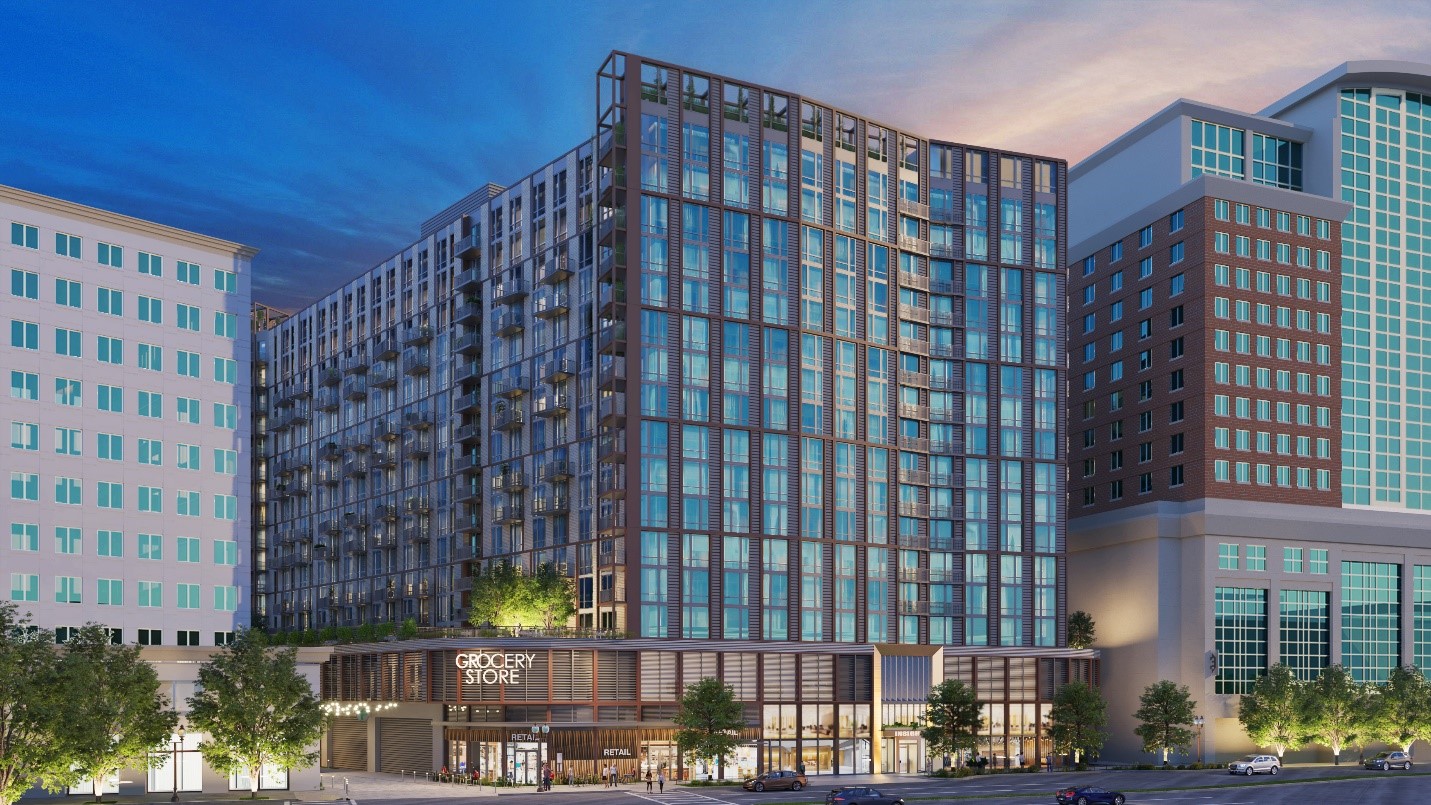
As approved, the Macy’s will be replaced with a 16-story mixed-use LEED Gold building containing a 44,000-square foot grocery store and 1,900 square feet of retail space on the ground floor, along with 553 residential units. The request necessitated a series of applications, including an Administrative Regulation 4.1 Site Plan Amendment, a Neighborhoods Form Based Code Amendment and Use Permit, the Certification of Transferable Density, and an ordinance of encroachment.

The approved building is intended to fulfill the Ballston Sector Plan’s goals and create an inviting and interconnected experience between the Ballston Quarter mall and nearby development. The building’s modern architecture provides softened edges and corners, and offers an inviting, connected, and greening space for those traveling in and around the property. A series of landscaped amenity terraces will be provided that will feature native and adapted pollinator-friendly planting species and bioretention plantings that will promote year-round biodiversity.

A ground floor interior connection will be provided between the grocery store and Ballston Quarter mall, which will create a gathering space at the mall’s western end. Insight has also committed to commissioning an art piece in the mall above the grocery store connection to serve as a complementary visual element to the Ballston Chandelier at the east end of Ballston Quarter.

The alley which runs through the block will be substantially enhanced into a more attractive experience while still serving as the primary vehicle and loading access for the new building. Existing arcades at both ends of the alley will be removed, and the alley will be reconfigured into a curbless environment punctuated by bollards, planters, green wall plantings, and seating areas.

Insight was also challenged to enhance pedestrian safety and provide visual and spatial connections between the project site and neighborhoods on the south side of N. Glebe Road. Accordingly, the project will activate the corner of N. Glebe Road and 7th Street N. by introducing new retail space and an articulated residential lobby entrance, as well as eliminating an existing layby lane.

From a transportation perspective, the project will provide generous sidewalks with shade opportunities, intersection safety improvements, and signal modifications. A new left-turn signal into the site on N. Glebe Road will provide access for grocery store patrons and will be accompanied by a series of pedestrian safety enhancements.

An emphasis was also placed upon utilizing existing infrastructure to help disperse traffic and mitigate some of the impacts of new construction on carbon emissions. This includes making use of nearby existing loading docks, service corridors, parking entrances, and ramp systems, as well as utilizing the County-owned Ballston garage for employee and overflow parking.

Housing affordability figured prominently into the project, which includes preservation of 118 market-rate affordable units at the Haven Apartments near Columbia Pike. The Haven Apartments were constructed as garden apartments in 1949 and are listed as “Notable” on the County’s Historic Resources Inventory. In exchange for transferring density from the Haven site to the Ballston Macy’s site through the County’s Transfer of Development Rights process, Insight agreed to commit the Haven’s units as Committed Affordable Units, record a historic easement to preserve the Haven’s architectural integrity, and make a series of sustainability and maintenance investments at the Haven site.

To address issues related to onsite affordability from an equity perspective in Ballston, Insight committed to a two-bedroom Committed Affordable Unit in the building, as well as 11 workforce housing units at 80 percent AMI.

The project will deliver a new retail anchor and housing adjacent to Ballston Quarter as well as fulfill the Ballston Sector Plan’s recommendations related to land uses, housing, streetscape, sidewalks, and providing commercial uses along major streets.

Walsh Colucci’s Andrew Painter and Lauren Riley represented Insight during this process.
 

Fairfax County Prepares for Zoning Updates

The Fairfax County Board of Supervisors will consider several amendments to the Comprehensive Plan and Zoning Ordinance this year. Three updates in particular, currently under consideration, are likely to affect development proposals in Fairfax County.

Affordable Housing Preservation Amendment

Affordable Housing is a critical goal of Fairfax County, and the County now looks to formally add new guidance to the Comprehensive Plan that underscores the importance of this goal. Draft text for the amendment, available here, seeks one-for-one replacement of existing affordable units on qualifying sites, with an overarching goal of “no net loss” in affordable housing rental units.

The amendment defines two forms of affordable units: Committed Affordable Units and Market Affordable Units. Committed Affordable Units are bound by agreements or other means to remain accessible to households with an income at 60% of the Area Median Income (AMI) for a minimum of 30 years. Market Affordable Units are not bound to serve any particular income level, but are accessible to households with an income at 60% of the AMI due to market forces. The County’s goal of “no net loss” includes both Committed Affordable Units and Market Affordable Units.

As written, the amendment calls for sites with four or more affordable units to be evaluated for the feasibility of one-for-one replacement at the time of redevelopment. Additional density may be considered for proposals that commit to long-term affordability, and additional height may be considered if it is necessary to meet the one-for-one replacement goal. Proposed redevelopment should also include a Relocation Assistance Plan, prepared by the developer. Additional guidance will be provided in the forthcoming Affordable Housing Preservation Administrative Policy Guidelines.

During the public hearing with the Planning Commission, staff acknowledged that one-for-one replacement may not be appropriate or feasible for all sites. All redevelopment remains subject to Zoning Ordinance requirements, and must be compatible with the surrounding area.

The Affordable Housing Preservation Amendment is scheduled to go before the Board of Supervisors on March 21, 2023.

Parking Reimagined

Over the past year, Fairfax County staff reviewed the requirements found in Article 6 of the Zoning Ordinance, which regulates off-street parking and loading. This review, termed the Parking Reimagined study, has resulted in a proposed comprehensive rewrite of Article 6.

Parking Reimagined provides a series of amendments to update the Zoning Ordinance. The recommended amendments resulting from Parking Reimagined are far-reaching and will affect nearly every proposal with required parking. These amendments include a revised chart of parking requirements for many uses, increased discretion for the Director of Planning and Development to reduce parking requirements, and revised bicycle parking requirements.

The amendments include a provision that zoning applications accepted for staff review prior to the effective date of any adopted amendments will proceed under the current provisions of the Zoning Ordinance, although applicants may opt into the new regulations.

In November 2022, County staff presented a draft proposal of these amendments to the Board of Supervisors’ Land Use Policy Committee. Staff continues to refine the proposed recommendations, and an updated white paper, available here, was published in early February 2023.

Parking Reimagined is tentatively scheduled to proceed to public hearings in the spring and summer of 2023.

Landscaping & Screening Zoning Ordinance Amendment

Landscaping and screening are a point of discussion with any development or redevelopment project. Fairfax County is currently conducting public outreach regarding possible amendments to the landscaping and screening provisions of the Zoning Ordinance.

Some possible changes include an increase in the percentage of parking lot landscaping, revising the barrier requirement, and modifying the width and planting requirements of transitional screening. Draft text is not yet available for potential changes to the existing regulations.

The Landscaping and Screening Zoning Ordinance Amendment is tentatively scheduled to proceed to public hearings in the summer of 2023.

We will continue to monitor the progress of the coming changes to Fairfax County’s zoning regulations. If you have questions as to how Fairfax County’s zoning updates may impact your development project, please contact Lynne Strobel at lstrobel@thelandlawyers.com.

Innovation Multifamily Approval Sets a New Standard for Loudoun County

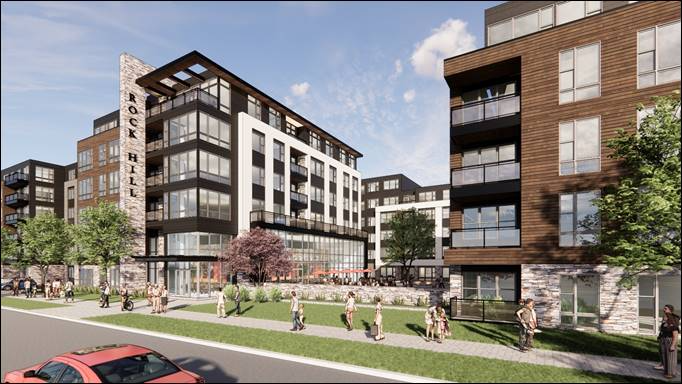
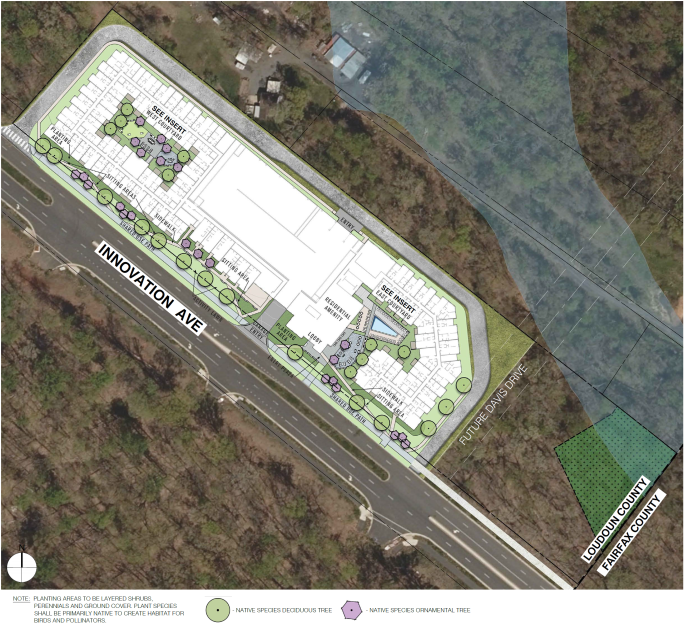
Greystar’s Innovation Multifamily project represents a paradigm shift in urban development in Loudoun County. The 415-unit multifamily building is located on less than five acres in a surprisingly untouched area of the county. For years, the area along Rock Hill Road and Innovation Avenue has been overlooked. The lack of infrastructure and access has hindered development options. With the recent arrival of Phase 2 of Metro’s Silver Line, this area is now coming to life.

In 2019, the county adopted a new comprehensive plan that for the first time in its history included an Urban Policy Area. This policy area calls for the highest building density in the county in close proximity to Metro stations. Despite the relatively untouched nature of the surrounding area, the Innovation Multifamily project is located entirely within a half-mile radius of the Innovation Center Metro Station. This proximity lends itself to a dense project that can help fulfill the goals and policies of the comprehensive plan.

The myriad features and commitments included with the Innovation Multifamily project set the standard for high-quality transit-oriented development in Loudoun County. Here are some of the features of the project:

• 10% ADUs (30%-50% AMI)
• 6 Live/Work Units
• Davis Drive Reservation and Dedication (126-foot right-of-way)
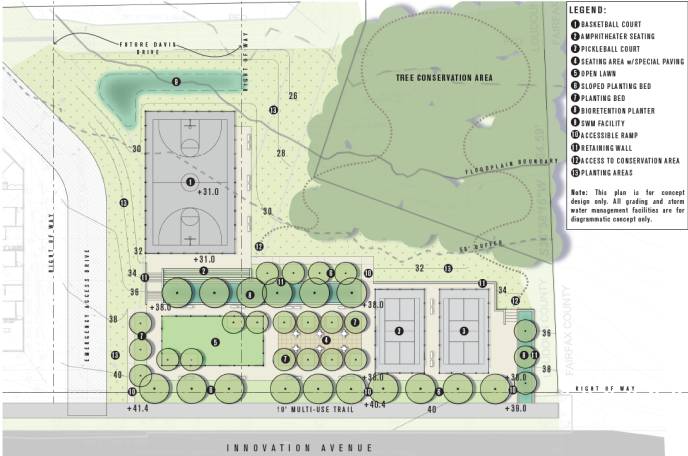
• 2-acre Neighborhood Park (Inclusive of a ½ acre Tree Conservation Area)
• Linear Park along Innovation Avenue
• NGBS Certification – Silver Level
• Bicycle Room (can accommodate 200 bicycles)
• Electric Vehicle Charging Stations (accommodates 16 spaces)
• Transportation Demand Management Program
• Innovation Avenue Crosswalks
• Bus Shelter
• Internal Amenities: Courtyards, Pool, Fitness Center, Co-working Space, Coffee and Snacks Refreshment Area, and Micro Market
• Capital Facility and Transportation Contributions

Despite all of the positive features and commitments included as part of the project, the rezoning application faced stiff resistance from county staff. Greystar, Walsh Colucci, and the development team that included Dewberry, Wells + Associates, HCM, and WSSI continually worked with county staff and the planning commission to improve the project throughout the review process. The Board of Supervisors understood and appreciated the application’s numerous benefits and voted to approve the application on November 15, 2022. This approval signals that well-thought-out urban development is appropriate in the right locations in Loudoun County. This project sets a new standard for which Loudoun County can be proud of and embrace as it embarks on a new chapter in its development.


Shared Easement Maintenance – What To Know

Easement Maintenance

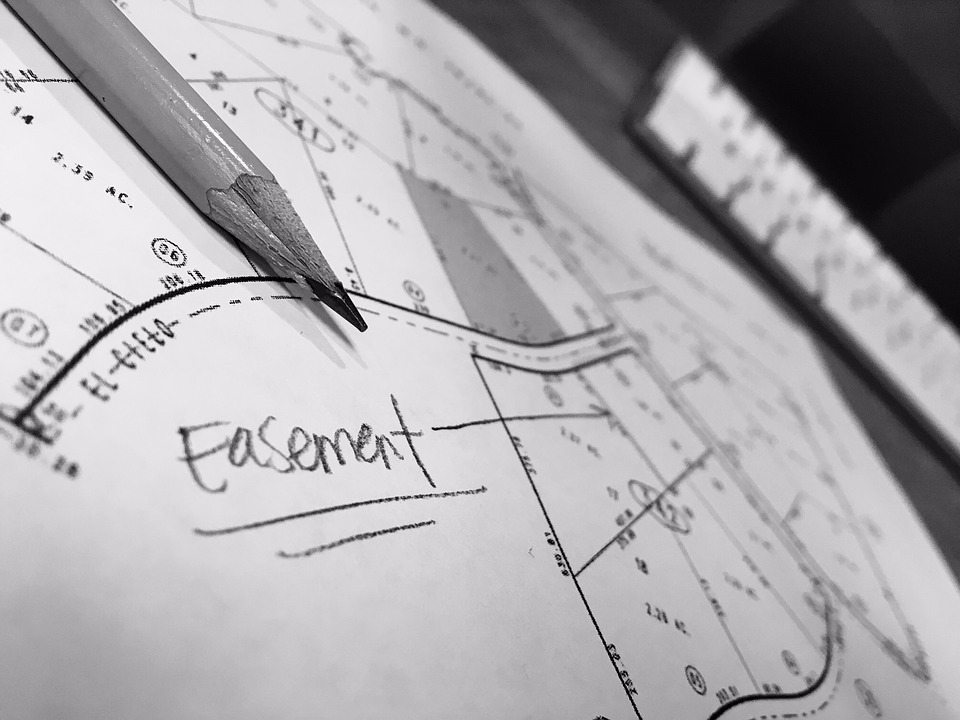
While most urban and suburban properties have direct access to a public right of way, some properties, particularly those in more rural areas, get their access to the public streets by way of an easement across a property that someone else owns.  Unlike public streets, easements are privately maintained.  Sometimes, an issue arises as to who is responsible for that maintenance.

Under common law, the owner of a property that gets its access by way of the easement has a duty to maintain the easement, but need only maintain the easement to the degree that the owner deems necessary for access to their own property.  This works very well when there is a single property using the easement.  The difficulty comes when more than one property uses the easement.

When more than one property uses the easement, the property owners should apportion the cost of repairs and maintenance relative to their use of the easement.  Unfortunately, the Virginia courts have not squarely addressed the issue of how the costs of maintenance should be apportioned if the parties cannot come to an agreement as to who should pay for what.  For example, it is not clear whether the owner of the servient estate (the property that the easement crosses) in a shared easement may make improvements to the easement and demand repayment from the owner of the dominant estate (the property that accesses by way of the easement).

The general rule is not the same when the dominant estate owner is the sole user of the easement as when the easement is used in common with other dominant estates or with the servient estate.  In this situation, courts have held that the users of a common easement should apportion the cost of repairs and maintenance among themselves relative to their use of the road, but have not given much guidance beyond that.  Often there is an issue as to what constitutes maintenance or repair, as opposed to improvements. In addition, some owners may use the easement in a manner that causes more damage than other users.

Of course, the best solution to the problem is to have a well-written agreement among the parties that clearly delineates maintenance responsibilities, sets out a clear procedure as to when and how the easement will be maintained, and a procedure to resolve disputes.  There is no adequate “cookie-cutter” or form document that can accomplish this because every situation is different.  In addition, any maintenance agreement should have the appropriate language to be binding on successors in title and should be recorded among the county land records so that it is binding on future purchasers of the properties.

For more information about shared easement maintenance or related matters, please contact John Rinaldi.


Image Source: Public Domain

Litigation Spotlight: Garth M. Wainman

Each month we spotlight our talented colleagues and learn a little more about their professional journey and how they make our firm special. This month we are spotlighting Garth Wainman as well as celebrating his most recent and well-deserved award, being voted Lawyer of the Year in the Washington, DC metropolitan region for Real Estate Litigation. Each year practicing lawyers in the U.S. are selected by their peers for inclusion in the edition of The Best Lawyers in America®. The Best Lawyers in America® “Lawyer of the Year” designation is awarded to only one lawyer in the DC Metro area with the highest average of votes in their particular practice and region. Without a doubt, this is indicative of Garth’s stellar reputation and impeccable work ethic in the legal field.

Garth’s roots as a lawyer have always been in real estate and commercial litigation since joining the Hazel, Beckhorn, and Hanes firm in the 1980s. That firm merged and became Hazel and Thomas and became a leader in Northern Virginia’s commercial litigation in both Virginia and federal courts.

Garth joined Walsh Colucci and Lubeley with long-time friend and partner John Foote in 1999 and brought their respective litigation and land use experience to the firm. Upon joining the firm, Garth chaired the Litigation group and helped build it into a strong and collaborative team of litigators that support the firm’s long list of established developers, builders, and contractors. While being recognized by Best Lawyers for many years as a top lawyer in both real estate matters and commercial litigation—in 2023 Garth was recognized as the top lawyer in the Washington Metro area in Commercial Real Estate Litigation. He believes this honor is a testament to being surrounded by talented and hard-working lawyers that pride themselves on staying current on all things real estate and business law and once a case heads to trial– simply out-strategizing and outworking our opponents.

If asked what makes a great litigator, Garth would say it starts with asking your client the hard questions up front and then giving them the unvarnished truth about the strength of their claims and defenses. Lawyers get their clients in trouble when they do not give them an honest up-front assessment of the weaknesses in the client’s case and the costs associated with settlement versus trial. Our litigation group firm has a very successful track record of defending our builder/developer clients against overly inflated multi-million dollar damage claims. In recent multi-million dollar suits in both state and federal courts, our litigation team has gotten either complete defense verdicts or minimal damage awards that were below what our client’s offered in settlement prior to litigation.

Garth constantly reminds his litigation group that being in a courtroom is the “last” place our business clients want to be so he stresses exhausting all creative settlement efforts to find common ground but if the other side leaves you no choice—make them regret it.


Virginia Business Magazine Honors Four Walsh Colucci Attorneys

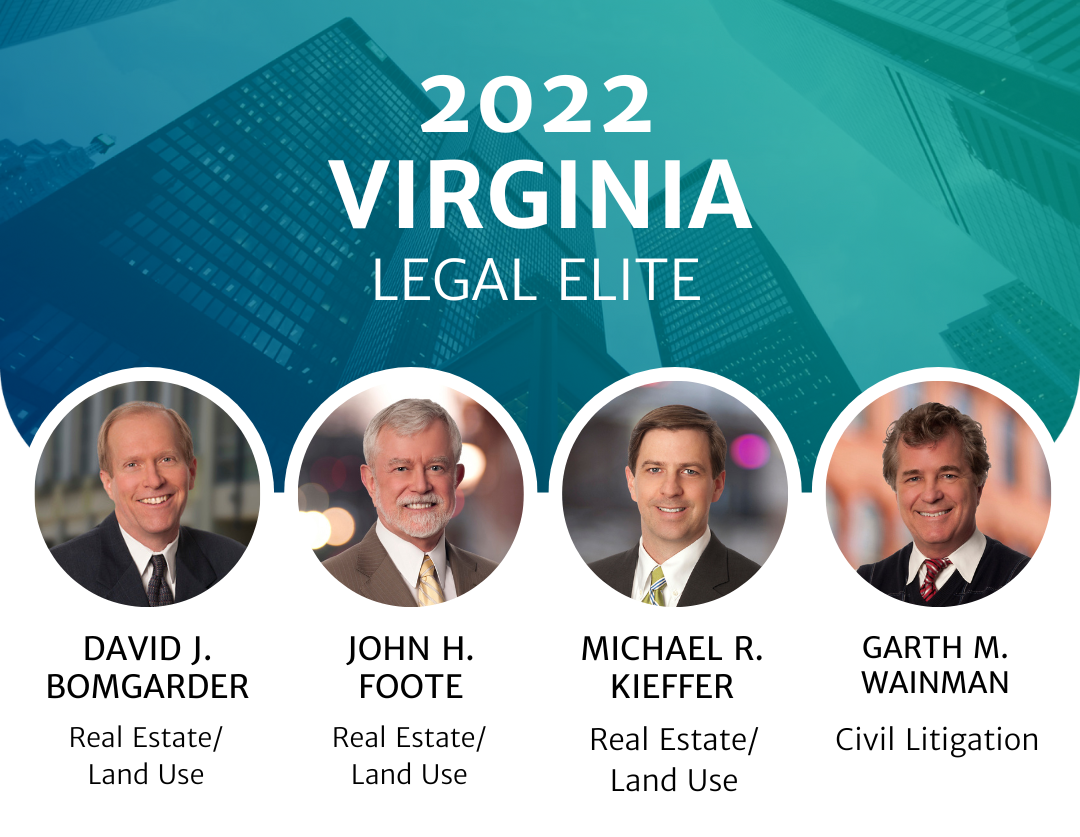
David J. Bomgardner, John H. Foote, Michael R. Kieffer, and Garth M. Wainman, are listed among the 2022 Virginia Business Legal Elite, published in the December issue of Virginia Business magazine. The Virginia Business Legal Elite list is compiled from nominations and votes submitted by the members of the Virginia Bar Association and Virginia State Bar. It has been published annually since 2000.

Congratulations to our attorneys recognized by Virginia Business magazine!

Arlington County Ends Local State of Emergency: Changes Coming to Virtual Meeting Process and Temporary Outdoor Seating

Changes are coming to Arlington County’s public meeting processes and Temporary Outdoor Seating Permits in the coming months:

Return of In-Person/Hybrid Meetings

The Arlington County Local Emergency Declaration (the “Emergency Declaration”), which was adopted by the County Board at the onset of the Covid-19 pandemic in March 2020, formally ended on August 15, 2022. The Declaration allowed the County to shift to virtual operations, including holding remote County Board commissions and advisory group meetings, such as those of the Site Plan Review Committee, the Planning Commission, and the Board of Zoning Appeals. A new statewide Virginia Electronic Meeting Policy took effect on September 1, 2022, which limits those instances in which virtual meetings may occur. The policy also prescribes procedures that must be followed when a public body holds an all-virtual public meeting and requires that a written policy governing such meetings be adopted by each locality.

Under the policy, public bodies may hold virtual meetings twice annually, or 25 percent of all meetings, whichever is greater. The policy further allows for remote participation by the public and individual commission/advisory group members by exception.

As a result, Arlington County’s myriad public bodies (as well as those of other jurisdictions across the Commonwealth) will likely be switching to a hybrid or in-person meeting format in the coming months.

Details for such protocol changes continue to evolve. In some instances, public bodies may limit in-person participation to the minimum necessary to achieve a quorum. In other instances, representatives of land use applicants may be invited in-person, with other design team professionals participating remotely. It is yet to be determined how the public will participate.

Recent SPRC meetings have been held in a hybrid format, with some SPRC members and applicant representatives attending in-person, while others attend virtually. Applicants are encouraged to work with their respective project planner on meeting format and attendance to ensure a smooth meeting process.

The scope of these changes will most assuredly vary depending upon the type of board, authority, or commission. As Arlington County transitions to new in-person and hybrid meeting formats, future attendees should assume flexibility and be prepared to adapt to the new expectations.

Temporary Outdoor Seating Area Permits

The Emergency Declaration created an expedited process for temporary outdoor seating areas (“TOSAs”), which allowed existing restaurants, bars, and cafes with valid Certificates of Occupancy to provide non-rooftop outdoor seating through an expedited application process. TOSAs proved extremely popular and afforded restaurants the ability to offer a safer dining experience to make up for reduced indoor seating capacity.

The County also continues to accept and process TOSA applications, and TOSA permits will remain valid until six months after the August 22nd end of the Local Emergency Declaration, or until February 15, 2023. Staff anticipates notifying all valid TOSA permit holders of any updates or changes to the TOSA policy prior to their expiration date.

As a result, the County has signaled a return to its pre-pandemic process for restaurants to apply for permanent outdoor seating. Depending upon the location of the outdoor seating area, this process may include, but not be limited to, use permit approvals for seating areas within public access easements or public property, minor site plan amendments, encroachments, administrative change requests, and applications for temporary structures/tents.

The County recently commenced a “Future of Outdoor Dining” (FOOD) study to evaluate the future of outdoor dining and the lessons learned from TOSAs under the framework of the Zoning Ordinance. More information may be found here.

The County Manager will provide an update to the County Board regarding the FOOD study in November, and the County has created a survey for feedback, which may be found here.

Employee Spotlight: Joanna Thomas

Joanna Thomas joined the firm in 2021 as a Litigation Associate for the Prince William office. Prior to joining the firm, Joanna worked as a Student Attorney for the Community Legal Practice Center in Lexington, Virginia. As a Student Attorney, she litigated civil disputes representing low-income individuals in the local community. She also worked as a Summer Associate for a litigation law firm in Fairfax County, and has interned for the Virginia Office of the Attorney General and the Honorable George D. Varoutsos, Chief Judge of the Arlington County Juvenile and Domestic Relations Court. Joanna is a graduate of Washington and Lee University School of Law. She obtained a Bachelor’s degree in Public Policy and Government from the University of Virginia.

This month the spotlight is on the Litigation team’s newest member, Joanna Thomas.

Tell us a little about yourself — where did you grow up?

I grew up in Falls Church and McLean, Virginia.

What did you want to be when you were younger?

When I was younger, I wanted to be an astronaut. I loved learning about the solar system. I even remember interviewing a NASA scientist for a third grade class project. Later on, my career path interest began to shift towards the legal field.

What aspect of your role do you enjoy the most?

I enjoy learning each client’s unique story and, as a litigator, working to advocate for our client’s interests whether through negotiation with other counsel or through written and oral argument in court.

Words of advice for aspiring lawyers?

In general, for anyone pursuing a legal career, I would say work hard and be perseverant. Resilience is key.

Aside from a very busy schedule, what do you like to do for fun outside of work?

I love traveling, cooking, cheering on the Hoos (wahoowa!), spending time with family and friends, and volunteering through my church’s community service initiatives.

What is one thing about you few people know?

I think crushed red pepper makes almost all food taste better. I put it on everything.

Favorite place(s) to travel to?

London. “When a man is tired of London, he is tired of life; for there is in London all that life can afford.”- Samuel Johnson

Favorite book?

Pride and Prejudice.

What do you think makes Walsh, Colucci, Lubeley & Walsh is a great place to work?

As an attorney in the early phase of my career, I am so appreciative of how willing people are to answer questions. Everyone’s door is always open.

Thank you, Joanna!

Built Podcast: Antonia Miller Digs into the Past to Get the Deal Done

Real estate transactions attorney and shareholder Antonia Miller was recently interviewed and featured on Fidelity National Financial‘s Built Podcast. Every case presents unique complexities and Antonia’s hands on, problem-solving approach both on paper and in-person have helped move the needle on her clients’ development projects. When Antonia is not on-site or digging through land records, she is stepping outside her bubble, exploring the community where she lives and works.

Listen to the podcast recording here. Also available on Spotify and Apple Podcasts.